ACTIVE / %Context growth
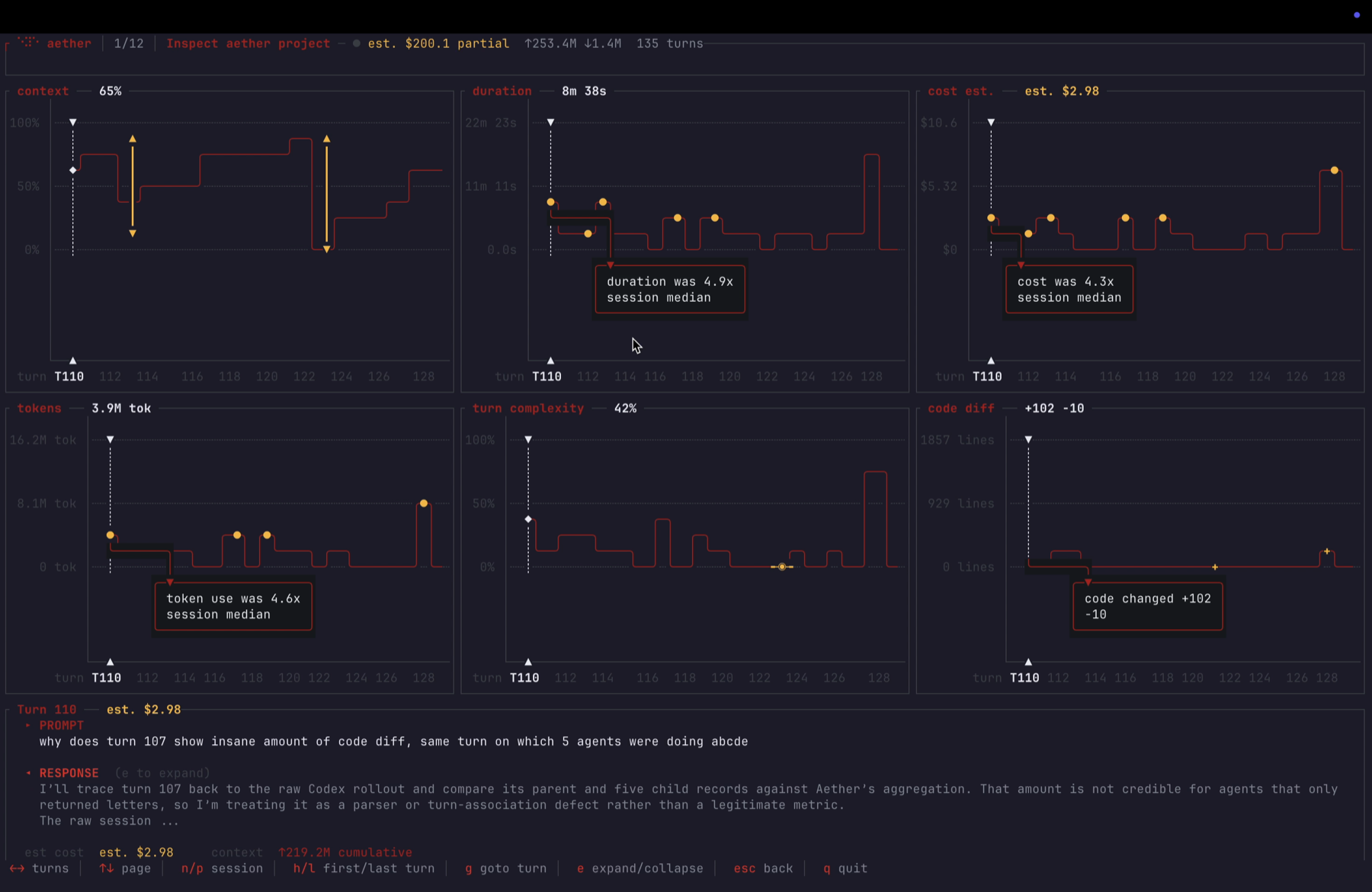
Follow the active window turn by turn and distinguish material compactions from small usage changes.
GUIDE AI agent context monitoring
Aether shows how coding-agent context grows across turns and estimates which sources account for each request. Repeated context is counted when the provider processes it again, while compacted history is replaced by the active summary.
01 The operational gap
A request can include the new user prompt, retained history, tool definitions and results, agent instructions, memory, hooks, documents, and provider runtime. Aether reconciles deterministic estimates to provider-native input totals and makes the approximation explicit.
02 What becomes visible
ACTIVE / %Follow the active window turn by turn and distinguish material compactions from small usage changes.
TOKENS / SHAREExplore a left-to-right tree from the prompt root through categories and named sources.
ALL / REQUESTCount retained context each time it is processed across internal parent and agent requests.
LOCAL / PRIVATEUse sanitized tool, document, and agent identifiers without exposing prompts, arguments, or contents.
03 Local pipeline
Provider-emitted input and cache totals remain the authoritative root.
A sequential ledger models retained history, tools, agents, and compaction boundaries.
Estimated categories scale deterministically to the native total and are marked with a tilde.
04 Practical questions
No. Providers expose request totals, not every component total. Aether marks category allocations as deterministic estimates.
The compact summary replaces earlier active history in the context ledger instead of being added on top of it.
No. The attribution tree uses sanitized metadata and never renders raw prompts, arguments, schemas, memory, or documents.
05 Start observing
brew trust --formula connectchiragg/tap/aetherbrew install connectchiragg/tap/aetheraether watch